Disclaimer: I am not a financial advisor, the info on this site is for educational purposes. All investing decisions should be based on your own research. Opinions expressed here are my personal views and should not be taken as financial advice.
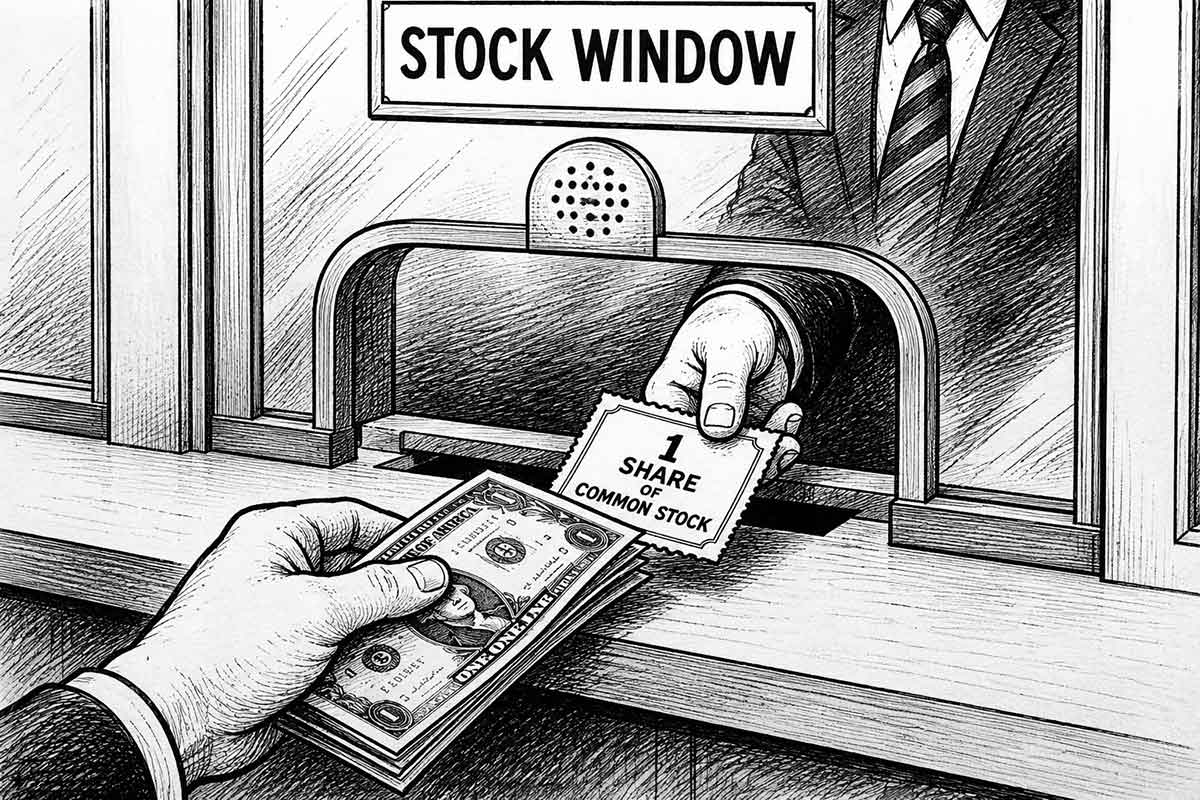
When you buy a stock, who are you actually buying it from? Many new investors assume they are buying shares directly from the company, but that is usually not how it works.
In most normal stock market transactions, you are buying shares from another investor who has decided to sell. The company itself usually does not receive your money. Instead, your order is matched with someone else’s sell order through the stock market, often in a fraction of a second.
Article highlights
- When you buy a stock, you are usually buying it from another investor
- Your broker helps send your order to a marketplace where buyers and sellers are matched
- The company usually only gets money when it first sells new shares, such as during an IPO
The short answer
When you buy a stock, you are almost always buying it from another investor.
That investor could be an individual person, a retirement fund, a mutual fund, an ETF, a hedge fund, a pension fund, or a large investment firm. You will not know who they are, and they will not know they sold the shares to you.
The transaction happens automatically through the stock market. Your broker sends your order into the system, and the system looks for someone willing to sell the same stock at a price that matches your order.
Think of it like buying a used car or truck
Imagine Ford builds a brand-new truck and sells it to its first owner. Years later, that owner decides to sell the truck.
Instead of buying directly from the owner, you go through a used truck dealership. The dealership helps connect you with the seller, handles the paperwork, collects your payment, and helps make sure ownership is transferred correctly.
In this example:
- The vehicle is the stock
- The previous owner is the investor selling the shares
- The used vehicle dealership is your broker
- You are the buyer
The dealership usually did not build the truck, and Ford does not get paid again when the used truck is resold. The dealership is just helping arrange the transaction between the buyer and the seller.
This is not a perfect one-to-one comparison. Real stock transactions involve exchanges, electronic order routing, clearing systems, and market rules. But as a simple example, it helps explain the main idea: you are usually buying from another owner, while your broker helps facilitate the transaction.
What actually happens when you click buy
Although it feels like you are buying directly from the company, there is a lot happening behind the scenes.
Here is a simplified version of the process:
- You place a buy order through your brokerage account
- Your broker receives the order
- Your broker sends the order to a stock exchange or another trading venue
- The marketplace looks for someone selling the same stock at a matching price
- Once a match is found, the trade is completed
- The shares appear in your account, and the seller receives the money
This process usually happens very quickly. From your point of view, it may look instant, even though several different systems are involved.
Why are they called stock brokers?
Your broker usually does not own the shares you are buying. Instead, the broker helps connect your order to the market so it can be matched with a seller.
That is why they have traditionally been called stock brokers. Their job is to broker, or arrange, the transaction between buyers and sellers.
Today, most of this work is handled by electronic systems instead of a person shouting orders on a trading floor. But the basic idea is still the same. The broker is the middleman that helps your order reach the market.
Who might you actually be buying from?
The seller could be almost anyone who already owns the stock, and as far as your concerned it doesn’t really matter who it is. With that said, you might be buying shares from:
- An individual investor taking profits
- Someone selling shares for retirement income
- A mutual fund rebalancing its portfolio
- An ETF adjusting its holdings
- A hedge fund or trading firm
- A day trader making a short-term trade
- A pension fund selling part of a position
You usually have no way to know who sold you the shares. Normal stock market trades are anonymous from the buyer’s and seller’s perspective.
Does the company get your money?
Usually, no.
If you buy shares of Apple, Microsoft, Tesla, or any other public company through a normal brokerage account, your money usually goes to another investor who sold those shares. It does not go directly to the company.
This surprises a lot of beginners. Buying a stock means you are buying ownership in a company, but it does not usually mean the company is receiving new money from you.
When does the company actually get paid?
A company usually gets money from selling stock when it creates and sells new shares.
This can happen during an Initial Public Offering, also called an IPO. That is when a company first sells shares to the public.
It can also happen if a company later issues additional shares to raise more money. This is sometimes called a secondary offering.
Outside of situations like those, most stock trades are simply investors buying and selling existing shares from each other.
Who decides the stock price?
The company does not directly decide its stock price every day.
The stock price is based on what buyers are willing to pay and what sellers are willing to accept. Every completed trade represents a price that one buyer and one seller agreed on at that moment.
If more buyers want the stock than sellers want to sell it, the price generally rises. If more sellers want out than buyers want to buy, the price generally falls.
SpaceX IPO
A good recent example is the SpaceX IPO (ticker: SPCX). Before the stock ever began trading, investment banks and the company worked together to determine an initial offering price. Once trading opened, however, that price was no longer controlled by SpaceX.
Thousands of investors immediately began placing buy and sell orders, and the stock’s value quickly changed as the market decided what it was willing to pay. The company’s enormous market valuation wasn’t simply chosen by SpaceX. It was ultimately determined by investors collectively agreeing that the available shares were worth that much.
This is why stock prices move throughout the trading day. The price is constantly adjusting as new buy and sell orders enter the market.
What if nobody is selling?
For large, popular stocks, there are usually buyers and sellers available almost all the time during normal market hours.
But in theory, if nobody is willing to sell at the price you want to pay, your order may not fill.
This is where order types matter. A market order tells your broker to buy at the best available price. A limit order tells your broker the highest price you are willing to pay. I typically don’t bother with limit orders, I just wait until the market price is palatable for me and I buy it. If you make a lot of purchases or are a very frequent trader, limit orders are very handy.
If your limit price is too low, your order may sit there until a seller is willing to accept that price, or it may not fill at all.
Frequently asked questions
Does Apple get my money when I buy Apple stock?
Usually no. In a normal stock market purchase, your money goes to another investor who sold you their Apple shares.
Can I choose who I buy the stock from?
No. Your order is matched automatically through the stock market. You do not choose the specific person or institution selling the shares.
Does the seller know I bought their shares?
No. Normal stock trades are anonymous. The seller does not know who bought the shares, and you do not know who sold them.
Can I buy stock directly from a company?
Sometimes, but that is not how most people buy stocks. Most investors buy shares through a brokerage account, where they are usually buying from another investor.
What happens when I sell my stock?
The same process happens in reverse. Your broker sends your sell order to the market, and the system looks for a buyer. When your order is matched, the buyer receives the shares and you receive the money.
The bottom line
When you buy a stock, you are usually buying it from another investor, not directly from the company.
Your broker acts as the middleman. It sends your order to a marketplace where buyers and sellers are matched electronically. Once a match is found, ownership changes hands, the seller gets paid, and the shares appear in your account.
Understanding this makes the stock market feel less mysterious. It is not just you clicking a button and sending money to a company. It is a huge marketplace where millions of investors are constantly buying and selling ownership in companies from each other.
💡 Explore our free financial tools:
- Salary increase calculator – see how a raise will impact your paycheck or annual income.
- Compound interest calculator – see how small investments grow over time.
- Debt payoff calculator – find out how long it takes to pay off your debt and what it’ll cost you.
- Subscription savings calculator – uncover the true cost of forgotten subscriptions.
- Student loan payoff calculator – plan student debt payments that fit your budget.
- Retirement investment calculator – check if your savings plan supports your retirement goals.
- Emergency fund calculator – learn how much cash to keep aside for peace of mind.
- Impulse buy calculator – double-check if those purchases are really worth it.
- Mortgage refinance calculator – see how refinancing could lower payments or save interest.
- Mortgage affordability calculator – find out how much house you can afford with your budget.